Hair-Growth Laser Caps
Home Environment · Devices
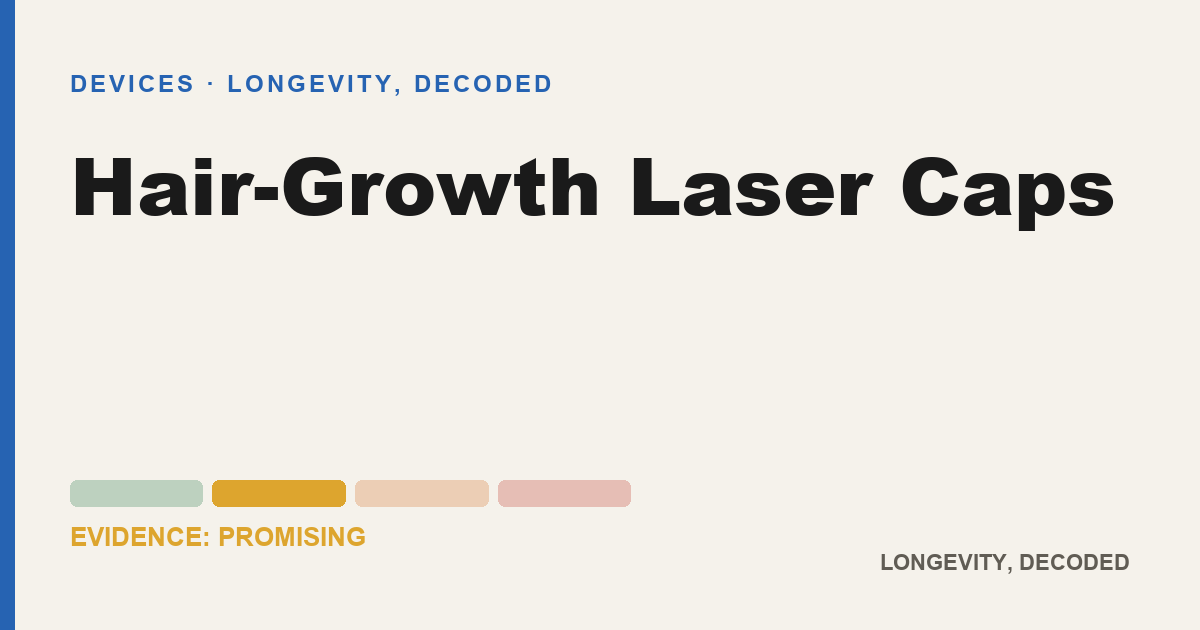
Evidence rating: Promising. Early human data or a strong mechanism, not yet conclusive.
Laser caps are among the better-supported devices here, with real trials behind them, but the effects are modest, variable, and only last as long as you keep using it. If you have early thinning, patience, and budget, it's a reasonable drug-free option to discuss with a dermatologist. Just go in expecting "a bit more" rather than a transformation.
What is Hair-Growth Laser Caps?
A hair-growth laser cap is a wearable helmet or band lined with low-level laser diodes or LEDs that shine red light onto the scalp. It’s a form of what’s called low-level laser therapy, or red-light therapy, applied specifically to the hair follicles. You wear it for a set time on a schedule, and the lights do the work while you go about your day.
What does Hair-Growth Laser Caps claim to do?
The claim is more and thicker hair: that the red light stimulates dormant follicles, slows shedding, increases hair density, and supports regrowth in people experiencing pattern thinning. Manufacturers position it as a non-drug, non-surgical option that’s easy to use at home.
Why do people use Hair-Growth Laser Caps?
Hair thinning is common, emotionally significant, and frustrating to treat. The mainstream options, daily medications and transplants, come with side effects, cost, or commitment. A laser cap appeals as a passive, drug-free alternative that you simply wear, and several devices carry regulatory clearance for marketing, which lends credibility.
What does the science actually say about Hair-Growth Laser Caps?
Of the gadgets in this section, hair-growth laser therapy has some of the better human evidence, though “better” is relative and the picture isn’t uniform. Multiple randomized, controlled trials have tested low-level laser devices for pattern hair thinning, and a reasonable number report modest increases in hair density and thickness compared with sham devices. That’s a real, measurable signal in actual human studies, which is more than most home devices can claim.
That said, the caveats matter. Many trials are industry-funded, effect sizes are generally modest, and results vary between studies and between people, some respond noticeably, others barely at all. The technology seems to work best for early-to-moderate thinning rather than long-established baldness, and benefits depend heavily on consistent, ongoing use. Stop using it and gains tend to fade.
It’s also worth being clear about framing: this is about supporting hair density and slowing thinning, not a guaranteed cure for hair loss. The mechanism, red light influencing follicle activity and cellular energy, is plausible and supported by the trial data, but the long-term, real-world durability is still being worked out. Overall, it sits in genuinely promising territory: real human trials, modest but repeatable effects, lingering questions about who benefits most and for how long.
How do people use Hair-Growth Laser Caps?
People typically wear a device for 10–30 minutes every other day, or per the manufacturer’s schedule, and stay consistent for at least three to six months before judging results. It’s often combined with other approaches under a clinician’s guidance. Patience matters, hair grows slowly, and trial benefits show up over months, not weeks.
Is Hair-Growth Laser Caps safe? Risks and who should skip it
Low-level laser therapy for the scalp is generally very safe, with side effects usually limited to occasional mild scalp irritation or dryness. It’s not appropriate for areas of skin cancer or active scalp conditions without medical advice. Anyone with significant or sudden hair loss should see a doctor first, since hair loss can have underlying causes worth identifying. Check with a clinician if you’re pregnant or have a scalp condition.
The bottom line on Hair-Growth Laser Caps
Laser caps are among the better-supported devices here, with real trials behind them, but the effects are modest, variable, and only last as long as you keep using it. If you have early thinning, patience, and budget, it’s a reasonable drug-free option to discuss with a dermatologist. Just go in expecting “a bit more” rather than a transformation.
Frequently asked questions about Hair-Growth Laser Caps
Does Hair-Growth Laser Caps actually work?
Several controlled human trials show modest, real increases in hair density, though effects are variable, often industry-funded, and depend on continued use.
Is Hair-Growth Laser Caps safe?
Low-level laser therapy for the scalp is generally very safe, with side effects usually limited to occasional mild scalp irritation or dryness. It's not appropriate for areas of skin cancer or active scalp conditions without medical advice.
How do people use Hair-Growth Laser Caps?
People typically wear a device for 10–30 minutes every other day, or per the manufacturer's schedule, and stay consistent for at least three to six months before judging results. It's often combined with other approaches under a clinician's guidance.
Related in Devices
Medical disclaimer: This article is for general information only and is not medical advice, a recommendation, or an endorsement. Nothing here is intended to diagnose, treat, cure, or prevent any disease. Talk to a qualified healthcare professional before changing anything you do. See our full disclaimer.