Berberine
Pills, Powders & Molecules · Foundations
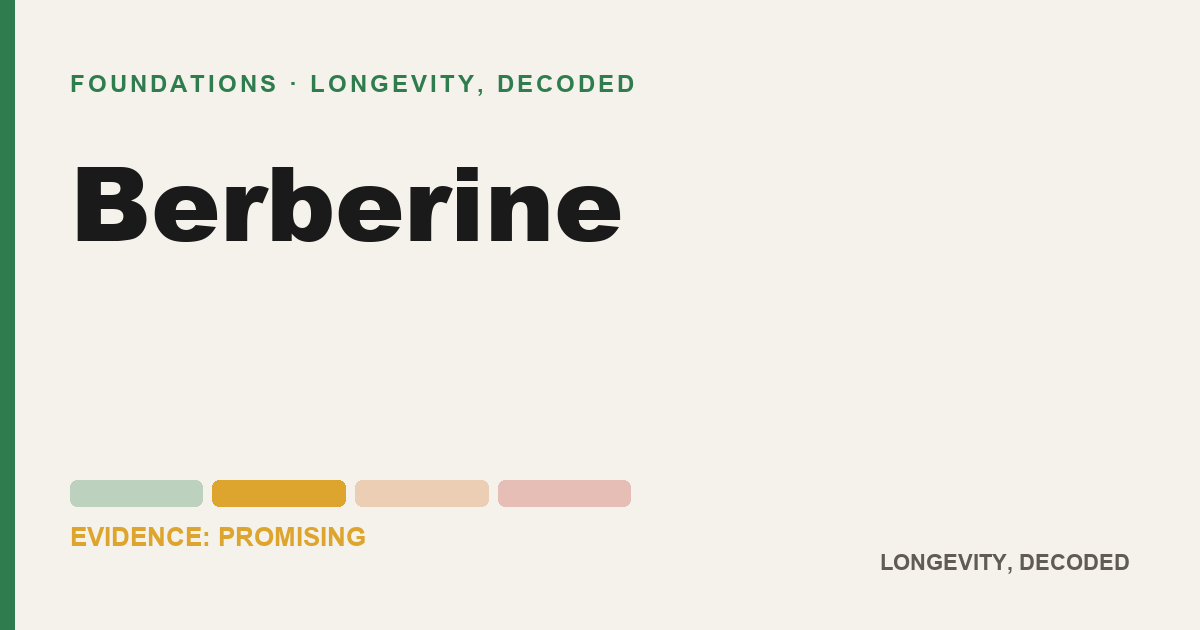
Evidence rating: Promising. Early human data or a strong mechanism, not yet conclusive.
Berberine is one of the more evidence-backed metabolic supplements, with real human data supporting healthy blood-sugar and cholesterol markers, but it's no "natural Ozempic," and its drug interactions are serious. Used sensibly alongside diet and exercise, and cleared with your doctor or pharmacist first, it's a credible option with honest, modest expectati
What is Berberine?
Berberine is a bright-yellow compound extracted from several plants, including goldenseal, barberry, and Oregon grape, and it has a long history in traditional Chinese and Ayurvedic practice. Today it’s sold as an over-the-counter capsule. Unlike most herbal extracts, it has a fairly well-studied effect on metabolism, which is why it’s earned a serious following.
What does Berberine claim to do?
The main claims are metabolic: that berberine supports healthy blood-sugar levels already in the normal range, supports healthy cholesterol and triglyceride levels, and may support healthy body weight as part of diet and exercise. It rocketed across social media under the nickname “nature’s Ozempic,” with claims it curbs appetite and aids fat loss, a comparison that oversells it.
Why do people use Berberine?
Two things drove berberine’s popularity. First, it’s one of the few herbal supplements with real human metabolic data behind it, which gives it credibility with the evidence-minded. Second, the viral “nature’s Ozempic” framing put it in front of millions hoping for an easy, over-the-counter weight-loss aid. It’s cheap, plant-derived, and feels like a natural alternative to a prescription, an appealing combination, even if the comparison is misleading.
What does the science actually say about Berberine?
Berberine is one of the better-supported supplements in this book for metabolic markers, with a caveat-heavy honesty attached. A reasonable body of human trials suggests berberine may support healthy blood-sugar handling and may support healthy cholesterol and triglyceride levels. For a plant extract, that’s a relatively robust track record, and it’s why berberine gets taken seriously where many herbs don’t.
That said, many of these trials are small, of modest quality, or come from a limited set of research groups, so the effects, while real-looking, should be held with some humility. The body of evidence supports “may support healthy metabolic markers,” not dramatic transformation.
The “nature’s Ozempic” label badly overstates things. Berberine is not a weight-loss drug and doesn’t work like prescription medications that target appetite hormones. Any weight effect seen in studies tends to be modest and tied to its metabolic actions, not a powerful appetite switch. Treating it as an equivalent is the kind of hype this book exists to push back on.
There’s also a practical hurdle: berberine is poorly absorbed, which is why dosing is split through the day and why some products pair it with absorption helpers.
How do people use Berberine?
A common approach is around 500 mg taken two to three times per day with meals, since splitting doses helps with its poor absorption and reduces stomach upset. People typically trial it for several weeks to a few months alongside diet and exercise. Some formulations use a more absorbable form or add black-pepper extract to improve uptake.
Is Berberine safe? Risks and who should skip it
The most common issues are digestive, cramping, diarrhea, or constipation, especially at higher doses. More importantly, berberine can interact with many medications, because it affects the same liver enzymes that process a wide range of drugs; this is a real concern, not a footnote. It can also lower blood sugar, which matters if you take diabetes medication. Anyone who is pregnant or breastfeeding should avoid it. If you take any prescription medication or have a health condition, talk to your doctor or pharmacist before starting.
The bottom line on Berberine
Berberine is one of the more evidence-backed metabolic supplements, with real human data supporting healthy blood-sugar and cholesterol markers, but it’s no “natural Ozempic,” and its drug interactions are serious. Used sensibly alongside diet and exercise, and cleared with your doctor or pharmacist first, it’s a credible option with honest, modest expectations.
Frequently asked questions about Berberine
Does Berberine actually work?
Genuine human data support metabolic-marker benefits, strong for a plant extract, but trials are often small, and the "nature's Ozempic" framing is overhyped.
Is Berberine safe?
The most common issues are digestive, cramping, diarrhea, or constipation, especially at higher doses. More importantly, berberine can interact with many medications, because it affects the same liver enzymes that process a wide range of drugs; this is a real concern, not a footnote.
How do people use Berberine?
A common approach is around 500 mg taken two to three times per day with meals, since splitting doses helps with its poor absorption and reduces stomach upset. People typically trial it for several weeks to a few months alongside diet and exercise.
Related in Foundations
Medical disclaimer: This article is for general information only and is not medical advice, a recommendation, or an endorsement. Nothing here is intended to diagnose, treat, cure, or prevent any disease. Talk to a qualified healthcare professional before changing anything you do. See our full disclaimer.