Ashwagandha
Brain, Mood & Adaptogens · Supplements
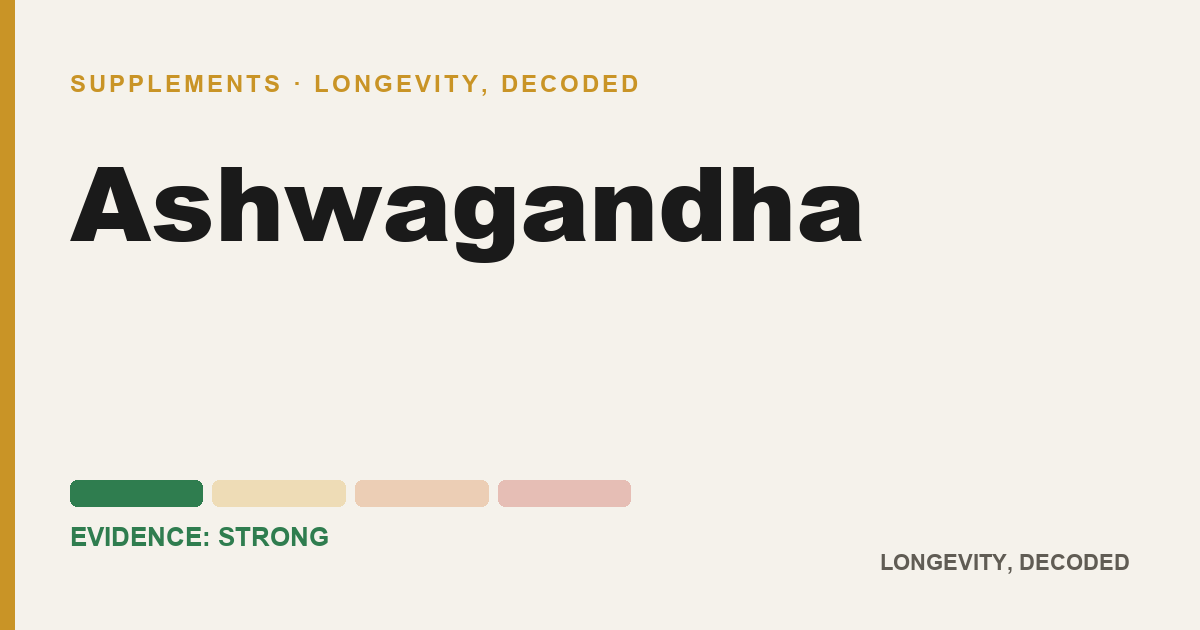
Evidence rating: Strong. Multiple good human studies support a real benefit.
Ashwagandha is one of the few herbal supplements with genuinely solid human evidence, specifically for taking the edge off stress and supporting sleep. If stress is your target, it is a sensible, affordable thing to try. Just respect the thyroid and pregnancy cautions.
What is Ashwagandha?
Ashwagandha (Withania somnifera) is a small shrub used in Ayurvedic medicine in India for thousands of years. Its root is the part used in supplements. It is classed as an “adaptogen”, a loose term for plants thought to help the body cope with stress. Most modern products are standardized root extracts, often sold under branded names that guarantee a set level of active compounds called withanolides.
What does Ashwagandha claim to do?
- Lowers stress and everyday anxiety
- Improves sleep
- Reduces the stress hormone cortisol
- Boosts energy, strength, and testosterone in men
Why do people use Ashwagandha?
Ashwagandha has become the go-to supplement for stressed-out modern life. It is cheap, widely available, and unlike many adaptogens it has a respectable pile of actual human trials behind it. It appeals to people who want a calmer baseline without a prescription, and it has crossed over from yoga studios into mainstream wellness, gym culture, and sleep stacks.
What does the science actually say about Ashwagandha?
This is one of the better-studied herbs in the book. Multiple small-to-medium randomized human trials have tested standardized ashwagandha extracts for stress and found a consistent pattern: people taking it report lower stress and anxiety scores than people on placebo, often alongside measurable drops in cortisol. The effect sizes are meaningful, and the results repeat across different research groups, which is what gives the rating its strength.
For sleep, several trials suggest ashwagandha may help people fall asleep faster and rate their sleep quality higher, particularly those who started with poor sleep. The data here is smaller but pointing the same direction.
The claims around testosterone and muscle are weaker. A few studies in men, often involving resistance training, have reported modest rises in testosterone and small gains in strength, but these are limited and not the main event. The honest summary: ashwagandha’s strongest, most repeatable benefit is helping people feel less stressed.
One caveat: most trials are short, typically 8 to 12 weeks, so long-term effects are less well understood.
How do people use Ashwagandha?
A common approach is 300 to 600 mg of a standardized root extract daily, taken with food, for 6 to 12 weeks. Some take it in the evening for sleep. The withanolide content matters more than raw milligrams, so people often choose branded standardized extracts.
Is Ashwagandha safe? Risks and who should skip it
Generally well tolerated; mild drowsiness or stomach upset are the usual complaints. It can lower blood sugar and may affect thyroid hormone levels, so people with thyroid conditions or on thyroid medication should be cautious. There have been rare reports of liver issues. Avoid in pregnancy. People with autoimmune conditions, those on sedatives, and anyone scheduled for surgery should check with a doctor first.
The bottom line on Ashwagandha
Ashwagandha is one of the few herbal supplements with genuinely solid human evidence, specifically for taking the edge off stress and supporting sleep. If stress is your target, it is a sensible, affordable thing to try. Just respect the thyroid and pregnancy cautions.
Frequently asked questions about Ashwagandha
Does Ashwagandha actually work?
Multiple decent human trials consistently show reduced stress and cortisol, unusually solid for a herbal supplement.
Is Ashwagandha safe?
Generally well tolerated; mild drowsiness or stomach upset are the usual complaints. It can lower blood sugar and may affect thyroid hormone levels, so people with thyroid conditions or on thyroid medication should be cautious.
How do people use Ashwagandha?
A common approach is 300 to 600 mg of a standardized root extract daily, taken with food, for 6 to 12 weeks. Some take it in the evening for sleep.
Related in Supplements
Medical disclaimer: This article is for general information only and is not medical advice, a recommendation, or an endorsement. Nothing here is intended to diagnose, treat, cure, or prevent any disease. Talk to a qualified healthcare professional before changing anything you do. See our full disclaimer.