NAC & Glutathione
Structural, Sleep & Everyday · Supplements
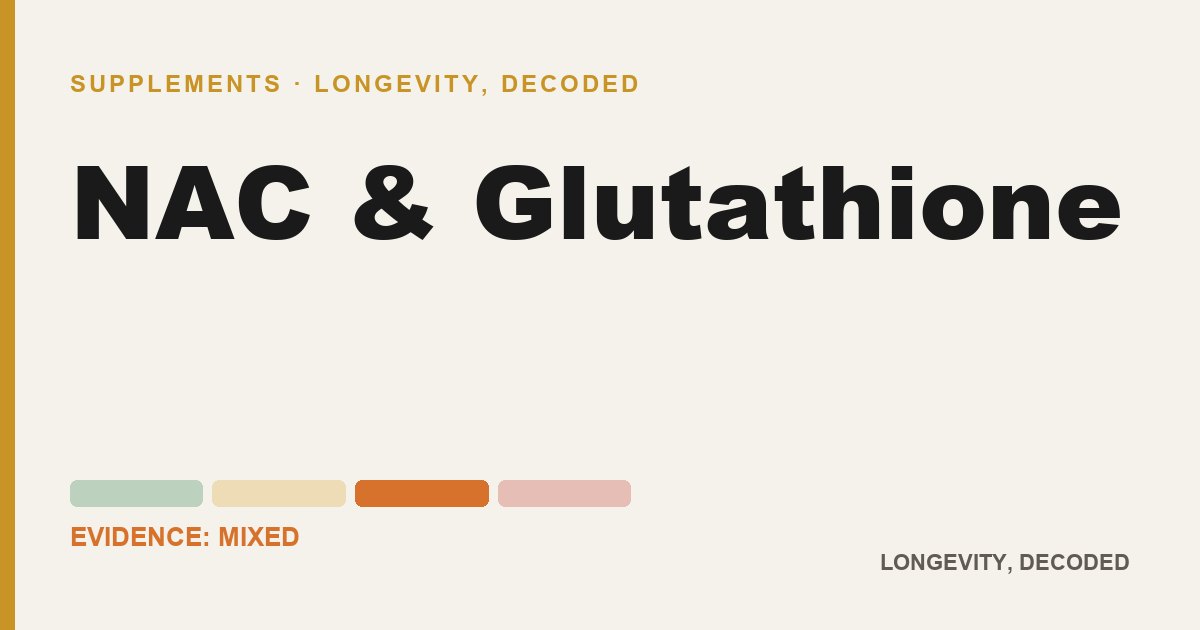
Evidence rating: Mixed / Early. Conflicting results, tiny studies, or mostly animal data.
NAC is a credible, affordable way to support your body's own master antioxidant, with solid underlying biology. But the sweeping anti-aging and skin-brightening claims outrun the human evidence. Reasonable to try; keep expectations grounded while the GlyNAC research matures.
What is NAC & Glutathione?
Glutathione is often called the body’s “master antioxidant”, a molecule your cells make to neutralize damaging free radicals and help with detoxification. The problem: swallowed glutathione is largely broken down before it can be used. So many people instead take NAC (N-acetylcysteine), a supplement that supplies cysteine, the limiting raw material your body needs to build its own glutathione. NAC is a long-used compound; glutathione itself is sold as capsules, lozenges, liposomal liquids, and IV drips.
What does NAC & Glutathione claim to do?
Claims cluster around “detox,” anti-aging, immune support, clearer skin (especially brighter, lighter skin from glutathione), respiratory comfort, and protection against the oxidative wear thought to drive aging. NAC specifically is promoted for mucus-clearing, liver support, and mental well-being.
Why do people use NAC & Glutathione?
The antioxidant story is intuitive and powerful: aging involves oxidative damage, glutathione fights it, so boosting it sounds like fighting aging at the source. NAC has real medical pedigree, which lends credibility. Glutathione IV drips and skin-brightening claims have made it a fixture in wellness clinics, while the longevity community is drawn to the NAC-plus-glycine glutathione research.
What does the science actually say about NAC & Glutathione?
NAC is genuinely well-studied as a compound and reliably raises the body’s glutathione production. That biochemistry is solid. The harder question is whether boosting glutathione in healthy people delivers the broad anti-aging payoff claimed. Here the evidence is early and mixed. The most interesting recent work pairs glycine with NAC (“GlyNAC”) and reports, in small studies of older adults, improvements in glutathione levels, oxidative stress markers, and several measures linked to aging. These results are encouraging but come from small groups and need much larger confirmation.
Oral glutathione itself has limited and inconsistent absorption evidence; some newer liposomal forms may do better, but human data are thin. The popular skin-lightening claim rests largely on small studies and is not well established. IV glutathione is widely marketed but poorly supported by rigorous evidence for general wellness.
A fair summary: NAC is a legitimate, well-characterized way to support your body’s own glutathione, and the antioxidant biology is real, but the leap from “raises glutathione” to “slows aging” is still being tested.
How do people use NAC & Glutathione?
Typical NAC use is 600–1,200 mg daily, often on an empty stomach, sometimes split into two doses. The longevity crowd commonly pairs it with glycine. People trialing it usually give it 4–8 weeks. Those using oral glutathione directly tend to choose liposomal forms in the 250–1,000 mg range. IV glutathione is clinic-administered and far more expensive.
Is NAC & Glutathione safe? Risks and who should skip it
NAC is usually well tolerated; the most common complaints are nausea and digestive upset, especially at higher doses. It has a strong sulfur smell some find unpleasant. NAC can interact with nitroglycerin and may affect blood clotting, so people on blood thinners or with bleeding concerns should be cautious. Its regulatory status as a supplement has shifted in some markets. Check with your doctor before use if you are pregnant, nursing, take medication, or have a health condition.
The bottom line on NAC & Glutathione
NAC is a credible, affordable way to support your body’s own master antioxidant, with solid underlying biology. But the sweeping anti-aging and skin-brightening claims outrun the human evidence. Reasonable to try; keep expectations grounded while the GlyNAC research matures.
Frequently asked questions about NAC & Glutathione
Does NAC & Glutathione actually work?
NAC reliably supports glutathione production, but human evidence that this yields broad anti-aging or skin benefits is early, small, and inconsistent.
Is NAC & Glutathione safe?
NAC is usually well tolerated; the most common complaints are nausea and digestive upset, especially at higher doses. It has a strong sulfur smell some find unpleasant.
How do people use NAC & Glutathione?
Typical NAC use is 600–1,200 mg daily, often on an empty stomach, sometimes split into two doses. The longevity crowd commonly pairs it with glycine.
Related in Supplements
Medical disclaimer: This article is for general information only and is not medical advice, a recommendation, or an endorsement. Nothing here is intended to diagnose, treat, cure, or prevent any disease. Talk to a qualified healthcare professional before changing anything you do. See our full disclaimer.