Grounding / Earthing
Light & Energy · Foundations
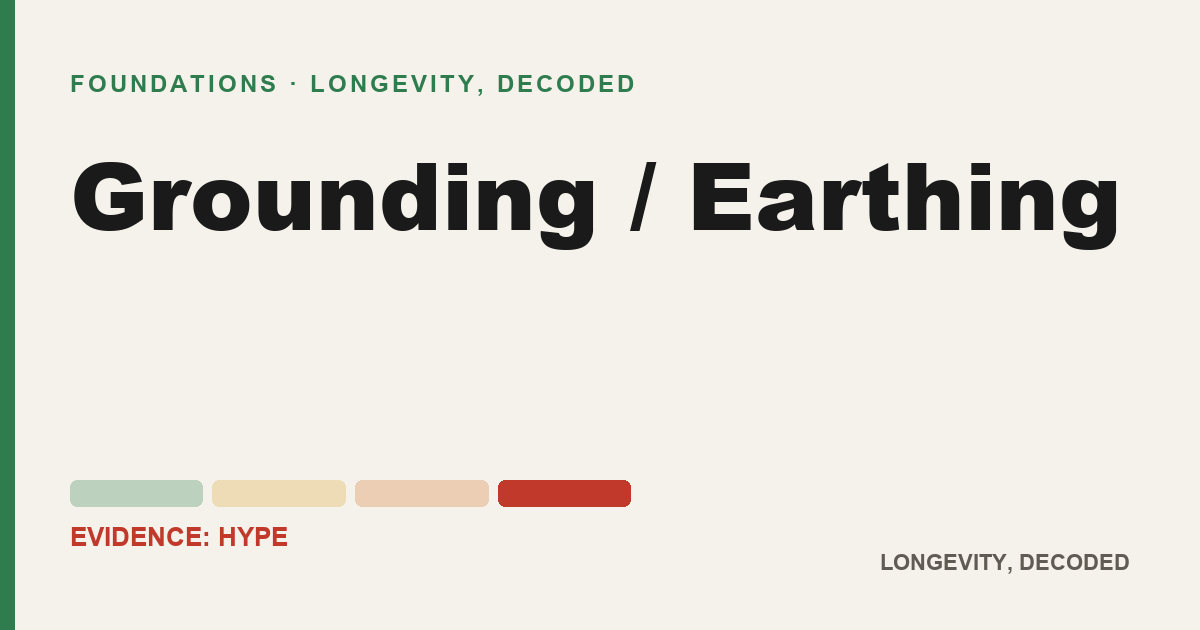
Evidence rating: Thin / Hype. Little or no human evidence; popular mostly on testimonials.
The good feeling of bare feet on the earth is real, and there's no harm in enjoying it. But the specific anti-inflammation, anti-aging claims rest on thin, conflicted evidence, so treat grounding as a pleasant free habit, not a proven treatment, and be wary of paying a premium for the products built around it.
What is Grounding / Earthing?
Grounding, also called earthing, is the practice of putting your bare skin in direct contact with the earth (walking barefoot on grass, sand, or soil) or using special indoor mats and sheets that connect to the ground wire of an electrical outlet. The theory is that the earth carries a mild negative electrical charge, and that direct contact lets this charge flow into your body, where supporters claim it neutralizes “free radicals” and calms inflammation.
What does Grounding / Earthing claim to do?
The claims are sweeping. Advocates say grounding:
- Reduces inflammation throughout the body
- Improves sleep
- Lowers stress and calms the nervous system
- Eases aches and speeds recovery
- Improves circulation and overall wellbeing
Why do people use Grounding / Earthing?
Grounding is free, simple, and emotionally appealing. It taps into a romantic, intuitive idea. That modern life has disconnected us from nature and that reconnecting, literally, is healing. Walking barefoot on a beach genuinely feels good, and that pleasant feeling lends the theory a credibility it hasn’t earned. The indoor mats and sheets have also turned a free outdoor activity into a product category, complete with confident marketing.
What does the science actually say about Grounding / Earthing?
This is where the honesty the book promises really earns its keep. The pleasant, calming experience of walking barefoot outdoors is real, but that’s not the same as the specific medical-sounding claims attached to grounding. The proposed mechanism, that electrons flow from the earth into your body and quench inflammation, is biologically speculative and not well established.
The human research that exists is sparse, mostly made up of very small studies, and a noticeable share of it comes from a small circle of researchers and companies with a stake in the products. Some of these small studies report changes in things like blood viscosity, sleep, or markers of inflammation. But the studies are tiny, often poorly controlled, hard to blind (it’s difficult to hide from someone whether they’re touching the ground), and have not been convincingly confirmed by larger, independent teams. That combination (small, conflicted, unreplicated) is exactly the profile that should make a careful reader cautious.
It’s entirely possible that some benefits people report are real but driven by other things: more time outdoors, more relaxation, more walking, better sleep habits, or simply expecting to feel better. None of that requires electrons flowing up through your feet. Until larger and independent research exists, the specific grounding claims remain firmly in the “interesting but unproven” category.
How do people use Grounding / Earthing?
The free version is simple: 20 to 30 minutes a day of bare skin on natural ground (grass, sand, soil, or unsealed stone) ideally where it’s safe to walk barefoot. The product version uses conductive mats, sheets, or patches connected to a grounded outlet or a ground rod, used while sitting, working, or sleeping.
Is Grounding / Earthing safe? Risks and who should skip it
Walking barefoot outdoors is low-risk for most people, but mind the obvious: cuts, splinters, sharp objects, and infection risk, especially for anyone with poor circulation, nerve issues in the feet, or diabetes, who should be cautious about going barefoot at all. With electrical grounding products, make sure any device is properly designed and used as directed, since they connect to household electrical wiring. If you have a medical condition affecting your feet or circulation, check with a doctor first.
The bottom line on Grounding / Earthing
The good feeling of bare feet on the earth is real, and there’s no harm in enjoying it. But the specific anti-inflammation, anti-aging claims rest on thin, conflicted evidence, so treat grounding as a pleasant free habit, not a proven treatment, and be wary of paying a premium for the products built around it.
Frequently asked questions about Grounding / Earthing
Does Grounding / Earthing actually work?
The human evidence is sparse, tiny, often conflicted, and unreplicated, leaving the bold claims resting mostly on theory and testimonials.
Is Grounding / Earthing safe?
Walking barefoot outdoors is low-risk for most people, but mind the obvious: cuts, splinters, sharp objects, and infection risk, especially for anyone with poor circulation, nerve issues in the feet, or diabetes, who should be cautious about going barefoot at all. With electrical grounding products,
How do people use Grounding / Earthing?
The free version is simple: 20 to 30 minutes a day of bare skin on natural ground (grass, sand, soil, or unsealed stone) ideally where it's safe to walk barefoot. The product version uses conductive mats, sheets, or patches connected to a grounded outlet or a ground rod, used while sitting, working,
Related in Foundations
Medical disclaimer: This article is for general information only and is not medical advice, a recommendation, or an endorsement. Nothing here is intended to diagnose, treat, cure, or prevent any disease. Talk to a qualified healthcare professional before changing anything you do. See our full disclaimer.